

close
Choose Your Site
Global
Social Media


Views: 0 Author: Site Editor Publish Time: 2026-11-06 Origin: Site


Aluminum hulls offer unmatched durability and impact resistance for offshore angling. However, deploying them in harsh marine environments introduces severe environmental stressors. The most notorious threat is galvanic corrosion. Saltwater acts as a highly aggressive electrolyte. It quickly attacks and destroys unprotected dissimilar metals across your vessel. Ignoring these chemical reactions leads to severe hull pitting. It eventually causes catastrophic structural failure. Buyers and owners must understand these unique operational requirements.
We will explore critical anti-corrosion systems and specific protective coatings. You will learn the exact daily workflows needed to maintain hull integrity. This guide breaks down actionable steps. It helps you protect your marine asset from harsh degradation. Adopting these proactive measures ensures long-term reliability. Whether you are a seasoned angler or a new owner, mastering these maintenance techniques is absolutely vital.
Galvanic corrosion is the primary threat: Saltwater acts as an electrolyte; without proper sacrificial anodes, dissimilar metals will rapidly degrade the aluminum hull.
Strict coating limitations: Copper-based antifouling paints will destroy an aluminum saltwater fishing boat; only specialized, copper-free barrier coats and paints are viable.
Hardware isolation is mandatory: All stainless steel fittings must be isolated from the aluminum hull using dielectric barriers to prevent localized pitting.
Predictable TCO: When strict post-trip flushing and annual anode replacement protocols are followed, aluminum offers a highly competitive lifecycle cost compared to fiberglass.
We face a serious business problem here. Saltwater accelerates oxidation continuously. It facilitates severe galvanic corrosion across the entire vessel. If you fail to mitigate this, consequences become dire quickly. The hull experiences deep structural pitting. Critical welds can eventually fail under pressure. Your marine asset depreciates catastrophically over time.
We must establish clear success criteria. A successful maintenance protocol prevents structural degradation completely. It maintains overall hull integrity year after year. It minimizes unplanned downtime during the busy fishing season. You want to stay on the water, not trapped inside the repair shop.
You must understand the "battery" effect thoroughly. Saltwater connects various dissimilar metals across the vessel. Think about stainless steel propellers and bronze thru-hull fittings. They interact directly against the softer aluminum hull. The salty water acts as a highly conductive fluid. This forces the least noble metal to corrode rapidly. On your vessel, the hull becomes the sacrificial metal. It literally dissolves to protect the stainless steel components. We must interrupt this electrical connection immediately. We achieve this using physical barriers and specialized sacrificial metals. These additions offer a weaker target for the electrical current. The current attacks the cheap anode instead of your expensive hull.
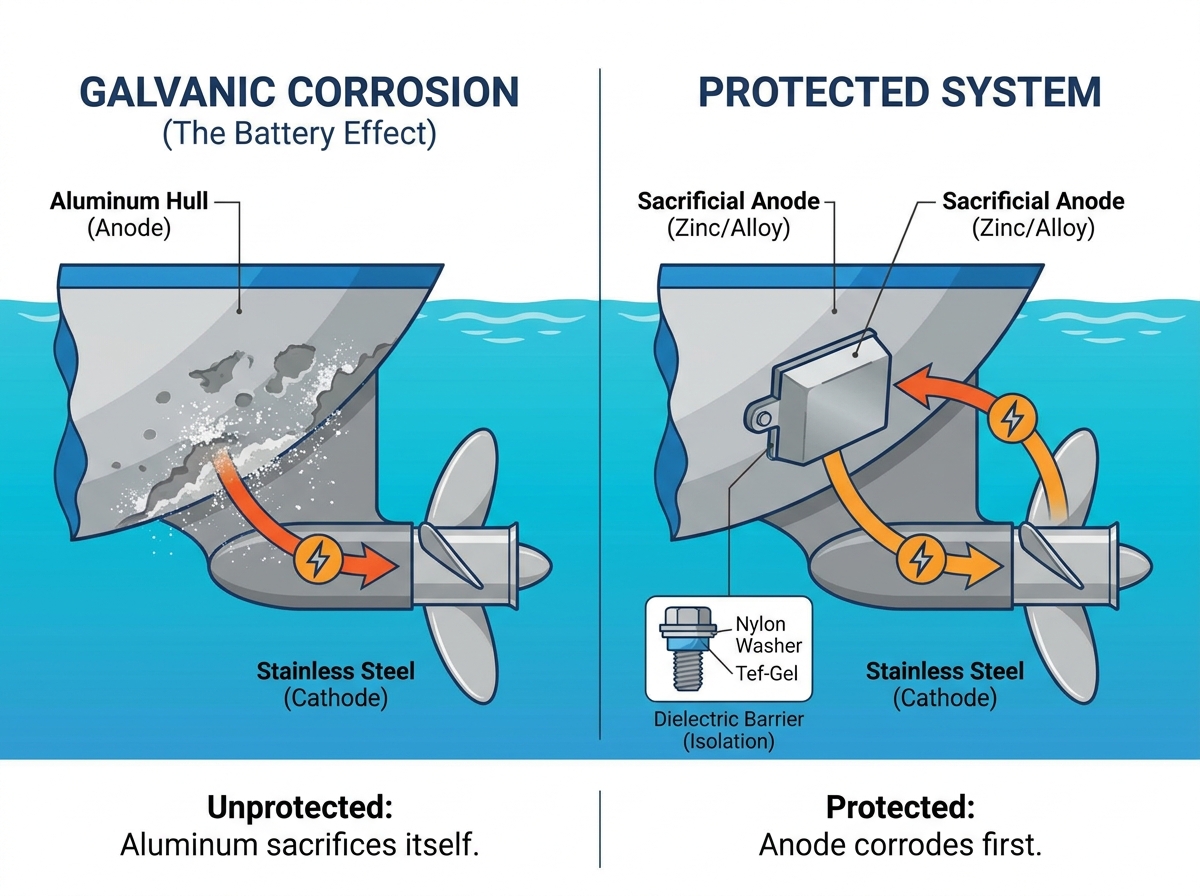
You need robust defense mechanisms to survive marine environments.
Matching the anode material to the water salinity is vital. Zinc serves as the traditional choice for pure marine environments. However, we highly recommend specialized aluminum-alloy anodes today. They often provide superior protection across varying conditions. They last significantly longer in mixed or brackish waters. You must evaluate your primary operational waters carefully. Using the wrong anode leaves your hull completely unprotected.
Table: Anode Material Comparison
Anode Material | Ideal Water Condition | Protection Lifespan | Common Usage Scenario |
|---|---|---|---|
Zinc | Pure Saltwater | Moderate | Deep ocean offshore vessels |
Aluminum Alloy | Saltwater & Brackish | Long | Coastal and estuarine navigation |
Magnesium | Pure Freshwater Only | Very Short (in salt) | Inland lake operation |
Standard marine paints pose an extreme implementation risk. Applying standard copper bottom paint causes severe galvanic corrosion immediately. It will destroy your vessel quickly from the bottom up. We evaluate robust epoxy barrier coats instead. You must combine them using strictly copper-free antifouling options. Cuprous thiocyanate paints work exceptionally well. Econea-based paints also offer fantastic long-term protection. These specific solutions are perfect for boats stored directly in the water.
Hardware isolation remains absolutely mandatory. You must use nylon washers and thick rubber gaskets everywhere. Anti-seize dielectric compounds like Tef-Gel are essential. Apply them generously when mounting new accessories. They prevent dangerous localized corrosion at the connection points. This practice extends the lifespan of your saltwater fishing boat. Proper isolation stops the battery effect at the source. Never bolt stainless steel directly to bare metal. It creates an immediate galvanic reaction. Use isolation plates for larger accessories. Wrap structural threads using high-quality Teflon tape.
Daily habits determine your long-term operational success.
Immediate freshwater flushing is critical. You must flush the outboard motor thoroughly after every launch. Plain water often leaves corrosive mineral deposits behind. You should use salt-neutralizing washes instead. Products like Salt-Away dissolve stubborn salt crystals efficiently.
Follow these actionable steps:
Connect a freshwater hose directly to the engine flush port.
Run the clean water for a minimum of 15 minutes.
Apply salt-neutralizing chemicals generously into the wash stream.
Spray the entire hull thoroughly from top to bottom.
Focus heavily on crevices and complex welded joints.
Rinse the trailer frame, leaf springs, and brake assemblies.
Yearly evaluations prevent catastrophic structural failures. Inspect your sacrificial anodes thoroughly every single month. You must replace them when they reach 50% depletion. Do not wait for complete degradation. Check all hull welds carefully under bright lights. Look closely for faint white powdery residue. This powder indicates early signs of aggressive oxidation. Test your bilge pump wiring systematically. Exposed connections leak stray current directly into the hull. Fix any damaged or frayed wiring immediately.
Avoid these common operational mistakes to protect your investment.
Stray Current Corrosion: Faulty 12V wiring causes rapid hull degradation. Poorly grounded shore power at the marina poses equal danger. You must verify electrical grounds constantly. Stray current destroys a hull in mere weeks.
Improper Cleaning Agents: Never use harsh automotive cleaners. Acidic solutions strip the natural aluminum oxide layer instantly. This exposes raw, bare metal directly to the harsh elements. Stick to pH-neutral marine soaps.
Trailer Neglect: Many owners focus solely on the fishing boat. They ignore the transport trailer completely. Galvanized or aluminum trailer components seize easily from salt exposure. Leaf springs and brakes require intense chemical flushing.
Storage conditions dictate your required maintenance frequency.
Trailer-kept vessels demand high daily labor input. You must perform daily washdowns meticulously after every retrieval. However, they incur lower ongoing chemical maintenance demands. You do not need expensive underwater barrier coats. They stay dry most of the time.
Slip-kept vessels face entirely different challenges. They require higher upfront chemical investments before launch. You must apply robust barrier coats and specialized paints. They face a much higher risk of stray current damage. You must monitor your submerged anodes strictly every few weeks.
Shortlisting logic requires careful structural planning. If purchasing a used vessel, act very cautiously. Commission a specialized marine survey immediately before buying. The surveyor must focus entirely on galvanic pitting and electrical grounding. If you audit a current vessel, take action today. Replace all depleted anodes first. Verify all hardware isolation systems thoroughly across the deck.
Operating an aluminum hull in marine environments is entirely viable. Owners must abandon passive maintenance habits immediately. Implement strict galvanic protection systems today. Utilize the correct copper-free coatings consistently. Adhere to rigorous freshwater flushing protocols after every single trip. These proactive steps ensure your vessel outlasts fiberglass counterparts easily. Evaluate your current storage situation carefully. Determine which protective systems require immediate investment. Protect your asset and enjoy reliable performance on the water.
A: Yes, but it requires professional preparation. You need a professionally applied epoxy barrier coat. You must use strictly copper-free antifouling paint. Frequent monitoring of sacrificial anodes is absolutely mandatory. These steps prevent severe galvanic and stray current corrosion effectively.
A: You should inspect anodes monthly. Replace them when they reach 50% depletion. Aggressive marine environments accelerate wear rapidly. Marinas sometimes experience stray current leaks. This may require you to replace anodes once or twice a season.
A: It creates a dangerous galvanic couple. The aluminum acts as the anode in this scenario. It corrodes rapidly to protect the stainless steel. You must isolate all stainless hardware using proper dielectric barriers.
A: Plain freshwater is certainly better than nothing. However, salt-neutralizing products perform much better. They break down the chemical bonds of salt crystals. This prevents the highly corrosive residue that plain water often leaves behind in crevices.


