

close
Choose Your Site
Global
Social Media


Views: 227 Author: Site Editor Publish Time: 2025-12-26 Origin: Site


Design Differences Between Landing Crafts with Cabins and Traditional Boats
Advantages of Landing Crafts with Cabins Over Traditional Boats
The Role of Landing Crafts with Cabins in Coastal Navigation and Marine Transport
Durability and Maintenance of Landing Crafts with Cabins vs. Traditional Boats
Which Is Right for You? Making the Choice Between Landing Crafts with Cabins and Traditional Boats
When it comes to choosing the right vessel for maritime transport or coastal navigation, boaters are often faced with a dilemma: should they opt for a Landing Craft with Cabin or stick with more traditional boats? This decision often depends on factors like comfort, functionality, and performance. While traditional boats have long been a staple of marine transportation, the rise of Landing Crafts with Cabins presents a significant shift in how people approach maritime journeys, especially those that require heavy-duty transport or coastal exploration.
In this article, we'll dive deep into the core differences between Landing Crafts with Cabins and traditional boats, highlighting their strengths, weaknesses, and applications. Whether you're considering a boat for marine use, coastal navigation, or transporting goods, this comparison will provide you with valuable insights to make an informed decision.
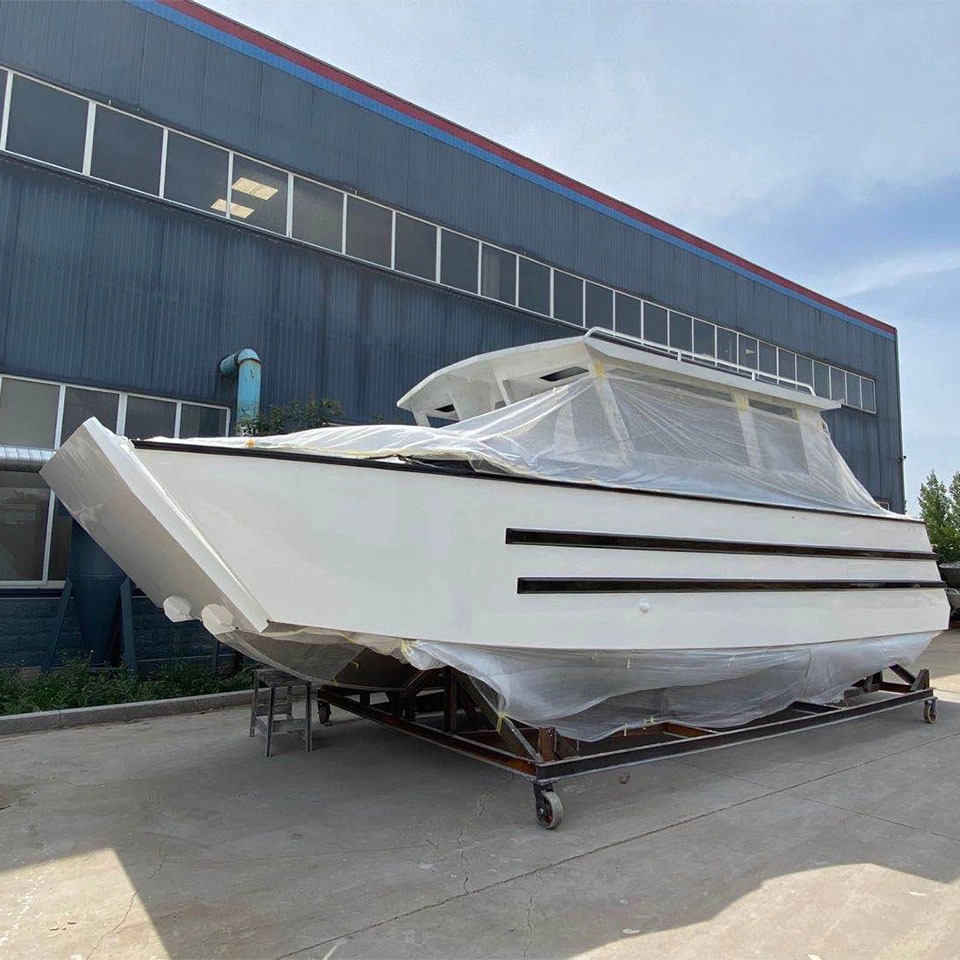
A Landing Craft with Cabin is specifically designed to transport both cargo and passengers over short to medium distances in challenging coastal waters. Typically, these vessels are equipped with a fully enclosed cabin, offering protection from the elements while maintaining a high level of durability and versatility. Unlike traditional boats that are often open-decked and simpler in design, landing crafts with cabins are engineered for performance and practicality in harsher conditions.
The professional design of a Landing Craft with Cabin makes it a popular choice for tasks that require transporting goods, especially in areas with rough waters or where docking infrastructure is limited. This type of vessel is built to carry a heavy load while providing stability and comfort for the crew and passengers.
Key Features:
Durability: Designed for harsh marine environments.
Capacity: Often higher capacity than traditional boats.
Comfort: The cabin offers a shielded environment, essential for long trips.
Performance: Strong, reliable engines for high performance in demanding conditions.
Traditional boats come in various forms, including dinghies, yachts, fishing boats, and ferries, all of which have their place in maritime culture. However, most traditional boats are typically open-air designs, without the enclosed cabins or specialized functions found in Landing Crafts with Cabins.
While traditional boats are excellent for leisure cruising, fishing, and short-distance transport, they often fall short when it comes to handling rough seas, heavy-duty transportation, or coastal navigation in challenging conditions. They tend to have lower capacity, are less stable in turbulent waters, and offer minimal protection against harsh weather conditions.
Common Types of Traditional Boats:
Fishing Boats: Designed for short-range marine use with a focus on agility.
Yachts: Primarily for leisure and pleasure, with no emphasis on heavy-duty usage.
Dinghies: Small, lightweight boats typically used for short trips or as tenders for larger vessels.
While traditional boats may be ideal for specific recreational purposes, their limitations become evident when compared to the versatility and functionality of Landing Crafts with Cabins.
The design of a Landing Craft with Cabin is fundamentally different from traditional boats. While both are built to navigate water, Landing Crafts with Cabins are specifically engineered to handle heavy cargo and provide protection for those aboard. Here are the major design differences:
Hull Shape and Stability
Landing Crafts with Cabins: Have a flatter hull, providing greater stability and a smoother ride over choppy waters. This design also allows for beaching, which is useful for loading and unloading cargo in areas without proper docking facilities.
Traditional Boats: Tend to have a more curved hull, designed for speed and agility but offering less stability in rough waters.
Cabin Structure
Landing Crafts with Cabins: Feature a fully enclosed cabin that shields passengers from the elements, making them more suitable for long trips, especially in adverse weather conditions.
Traditional Boats: Generally have open decks or small shelters, which might not provide enough protection for long voyages or heavy-duty marine use.
Weight and Load Capacity
Landing Crafts with Cabins: Heavier and built for high-capacity loads, these boats can transport a substantial amount of goods, equipment, or personnel.
Traditional Boats: Designed for lighter loads and quicker travel, making them unsuitable for transporting large or heavy cargo.
Propulsion and Power
Landing Crafts with Cabins: Often equipped with high-performance engines capable of providing the power needed to move large loads across challenging terrain.
Traditional Boats: Typically use smaller engines suitable for moderate distances or speed, but not capable of handling large cargo.
One of the primary benefits of a Landing Craft with Cabin is the comfort it offers during extended journeys. The enclosed cabin protects passengers and crew from harsh winds, rain, and extreme temperatures, making it ideal for year-round usage, even in remote coastal regions.
Protection: Shelters from sun, rain, and wind.
Comfort: Comfortable seating and storage areas make longer trips more manageable.
Landing Crafts with Cabins are designed to carry heavy loads without compromising on stability. Whether you’re transporting goods or personnel, these vessels can handle substantial weight while maintaining balance, especially in rough seas. This is a clear advantage over traditional boats, which often struggle with stability under heavy loads.
| Feature | Landing Craft with Cabin | Traditional Boat |
|---|---|---|
| Load Capacity | High, up to several tons | Low to moderate |
| Stability | High, even in rough waters | Moderate, may be unstable |
| Cabin for Protection | Yes, enclosed cabin | No or limited shelter |
Unlike traditional boats, which may struggle in poor weather conditions, Landing Crafts with Cabins are built to perform reliably year-round. Their design and materials are tailored to withstand marine environments, making them suitable for any type of marine operation, even in the most adverse conditions.
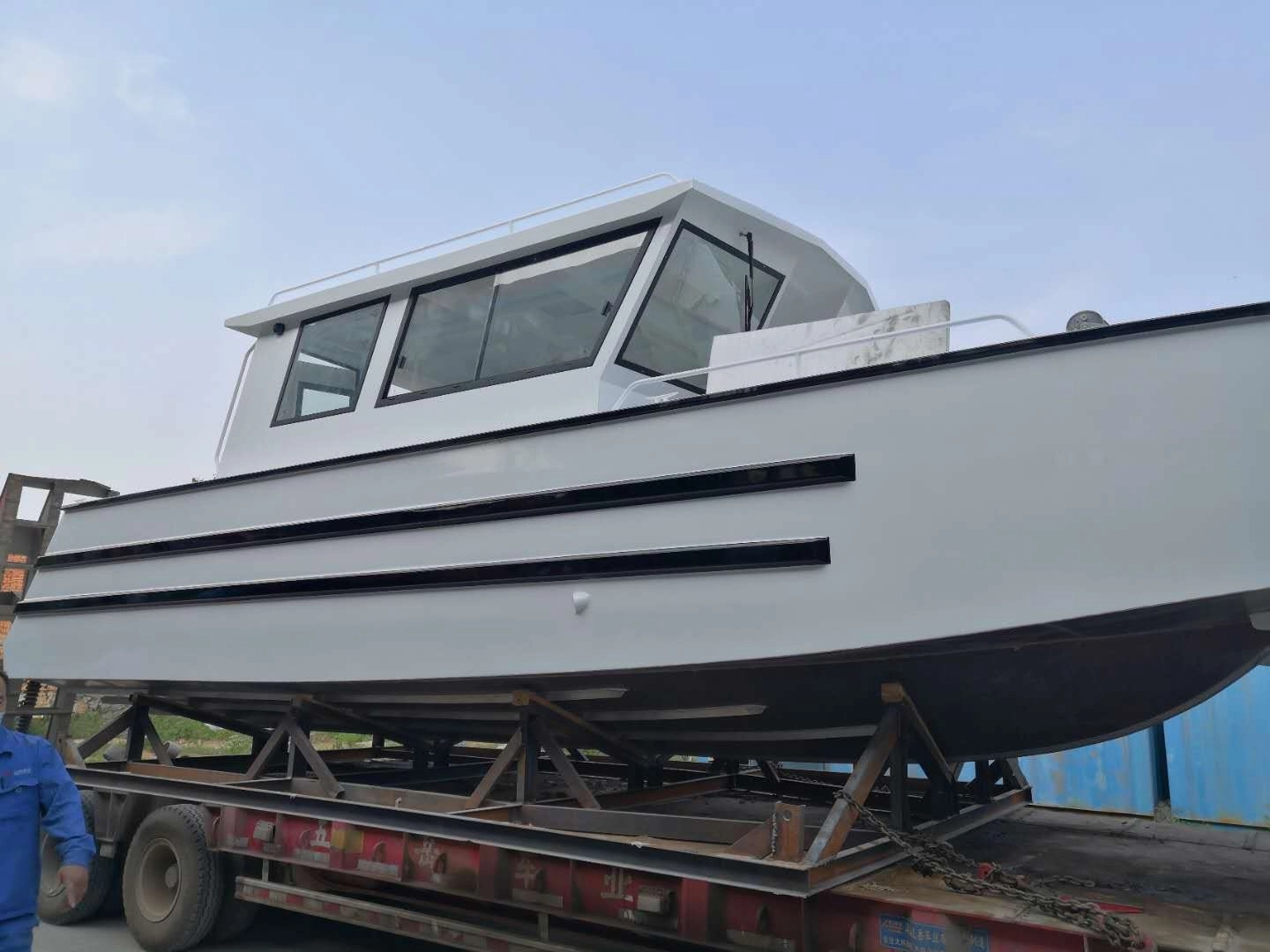
Landing Crafts with Cabins have proven to be indispensable in coastal navigation and marine transport, especially for industries such as logistics, rescue operations, and military applications. Their design allows them to operate efficiently in shallow waters, with the ability to “land” directly on beaches or remote areas, making them a great choice for transporting goods to and from islands or coastal regions where traditional boats may not be able to dock.
Key Uses:
Transporting Goods: Ideal for delivering heavy cargo or equipment to isolated areas.
Rescue Operations: Used by coast guards and rescue teams due to their stability and capacity.
Military and Defense: Provides a high degree of protection and versatility in transporting troops and supplies.
When comparing Landing Crafts with Cabins to traditional boats, durability and maintenance are critical considerations. Landing Crafts with Cabins are built to endure rough marine conditions and heavy use, making them highly durable, though they may require more maintenance due to their complex design and high-capacity features.
Traditional Boats, while generally simpler, are often less durable under heavy usage and may require frequent repairs when exposed to harsh conditions. However, they can be less costly to maintain due to their simpler construction and smaller engines.
The choice between a Landing Craft with Cabin and a traditional boat comes down to your specific needs and how you intend to use the vessel. If you’re focused on marine transport, heavy-duty performance, or all-weather protection, a Landing Craft with Cabin is likely the better option. On the other hand, if you require something for leisure trips, fishing, or short-distance navigation, a traditional boat may meet your needs at a lower cost.
Choosing between a Landing Craft with Cabin and a traditional boat depends on your specific requirements. For those looking for high-performance, durability, and the ability to handle heavy cargo or extended journeys, a Landing Craft with Cabin provides clear advantages. However, for more casual, short-range trips, traditional boats remain a popular and practical choice.
1.What makes Landing Crafts with Cabins more stable than traditional boats?
Landing Crafts with Cabins are designed with a flatter hull and higher load capacity, providing greater stability in rough waters compared to the more curved hulls of traditional boats.
2.Can a Landing Craft with Cabin be used for recreational purposes?
While primarily designed for practical tasks like transporting goods, a Landing Craft with Cabin can also be used for recreational purposes, especially for those who prioritize comfort and protection.
3.What are the key advantages of having a cabin on a boat?
The enclosed cabin on a Landing Craft with Cabin offers protection from the elements, comfort during long journeys, and a higher level of safety in harsh marine conditions.


